What is a Proof of Concept (PoC)? ✎
OpenCRVS can be quickly configured to meet the basic civil registration needs of a country, which provides a unique opportunity to test the product and learn more about specific business needs and system requirements before procuring a full system. ✎
The Proof of Concept (PoC) may confirm OpenCRVS as the right product for implementation or help identify the requirements that can be used within a competitive tender process. ✎
When is a PoC suitable?
✎
- You are considering a digital CRVS system but have not yet decided on a product ✎
- You are interested in an OpenCRVS implementation but want to get a feel for the solution via a low-cost prototype first ✎
- You need to define future-state civil registration business processes ✎
- You want to co-create the eCRVS system requirements together with key users ✎
 ✎
✎
A typical proof of concept ✎
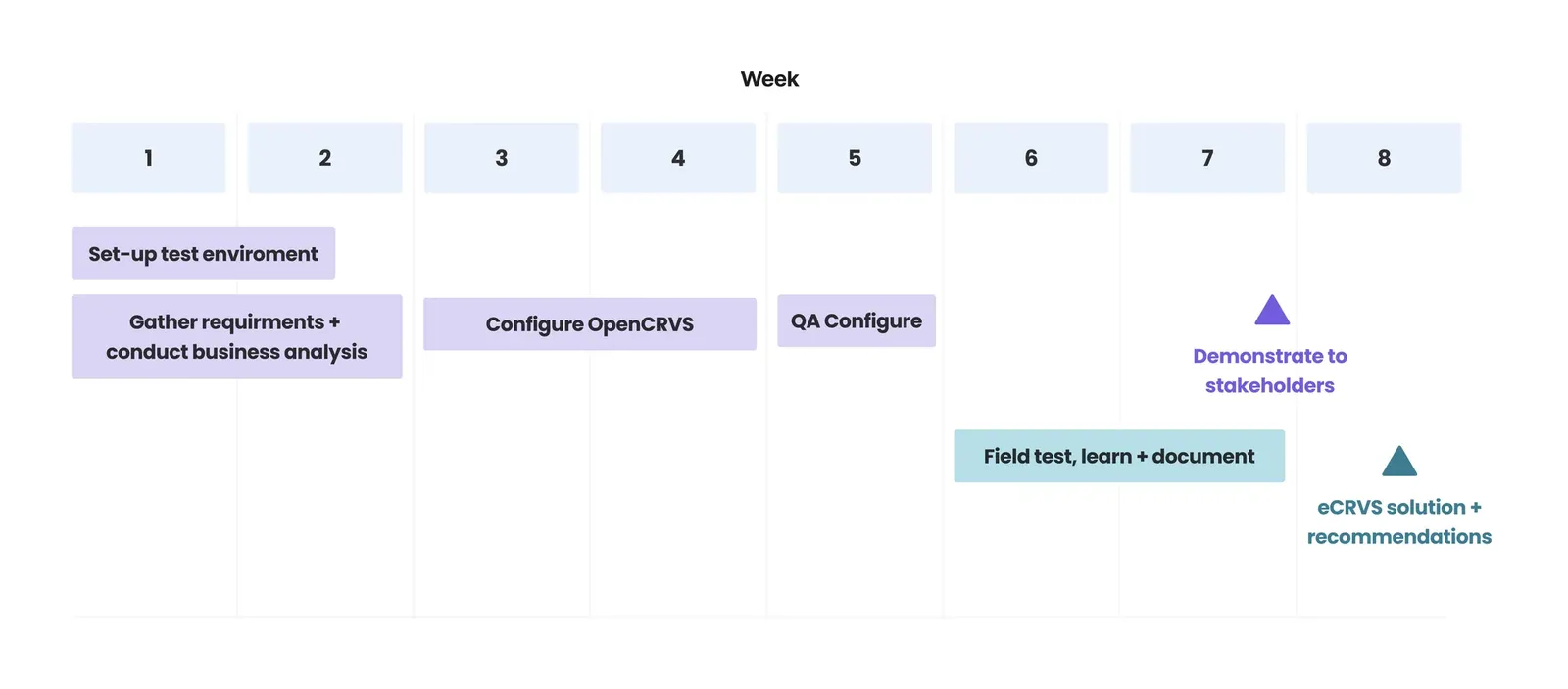
Detailed below is a high-level workplan and key steps for PoC activities. These will cost between $50k and $100k depending on the size of country and extensiveness of field-testing and requirements analysis. ✎
 ✎
✎
-
The OpenCRVS PoC is best hosted in a private or public cloud. For step-by-step guidance on how to prepare a new OpenCRVS environment see Installation and Configuration guidance.
✎ -
A Business Analyst will gather all the inputs required to configure OpenCRVS for the country context, as well as gaining a basic understanding of the business requirements that OpenCRVS must support through engagement with key stakeholders. ✎
-
A System Administrator will then be able to configure OpenCRVS for the PoC with a minimum of inputs: ✎
-
Vital event registration forms ✎
-
Vital event certificates ✎
-
Administrative reference data ✎
-
Health facility reference data ✎
-
Population data, including crude birth / death rates ✎
-
Country customisation e.g. logos, translations etc. ✎
For step-by-step guidance on how to configure OpenCRVS, see Installation and Configuration guidance.
✎ -
-
Test the configured version of OpenCRVS with end-users in a variety of different contexts, in order to: ✎
-
Verify that existing OpenCRVS functionality is relevant in-country ✎
-
Identify additional system requirements that need to be built ✎
-
Gather user feedback to ensure the product is fit for purpose ✎
-
Understand what service-delivery models are most effective in achieving CRVS goals ✎
-
-
Share the results of the field-testing with key stakeholders and demonstrate the PoC in a conference room environment or in the field.
✎ -
Based on the learnings from the OpenCRVS proof of concept, a country can decide to: ✎
-
Use OpenCRVS as their eCRVS solution, with further modifications to respond to feedback from field testing ✎
-
Use the PoC learnings to inform system requirements for the procurement of an eCRVS solution ✎
-
PoC locations ✎
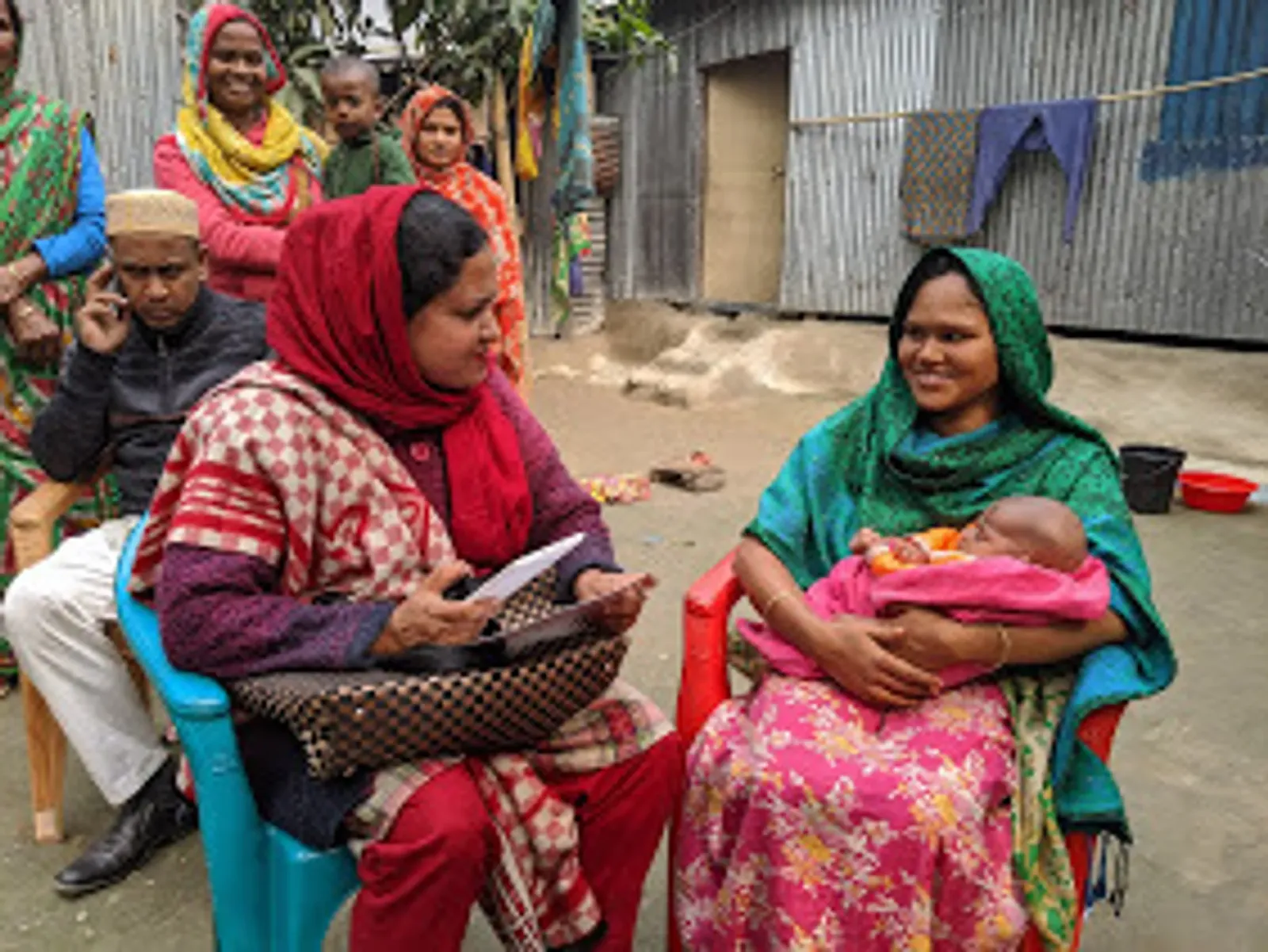
Proofs of concept have been conducted in Bangladesh, Zambia and Niue. ✎
 ✎
✎