Implementation ✎
Effective preparation is essential for CRVS digital transformation. Our implementation planning resources detail how OpenCRVS can be deployed in various countries, including associated costs, ensuring a successful outcome. ✎
 ✎
✎
Proof of concept ✎
A Proof of Concept (PoC) quickly sets up a basic version of OpenCRVS to handle a country's core birth and death registration. This allows the country to test the product and learn about their specific ways of working and what the full system needs to be able to do before they decide to fully buy and implement it. ✎
A Proof of Concept for OpenCRVS helps confirm the product's suitability, demonstrates its digital CRVS capability with core functionality, identifies additional requirements via field-testing, and informs a long-term digitisation strategy, but it is not a full requirements gathering process, customisation, or live registration.
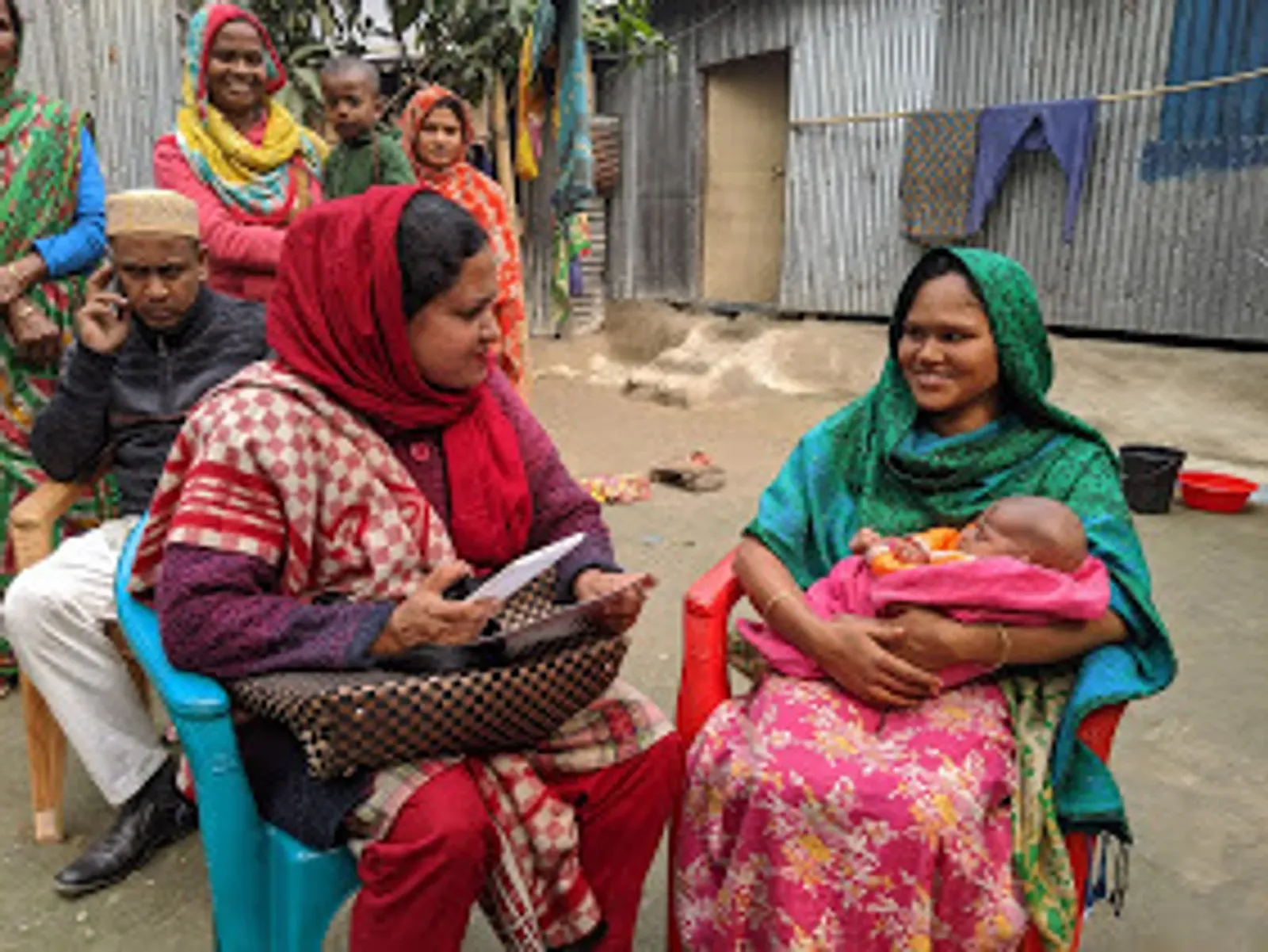
Photo courtesy of Plan International: Health Worker in Bangladesh declaring a birth in the community during PoC.
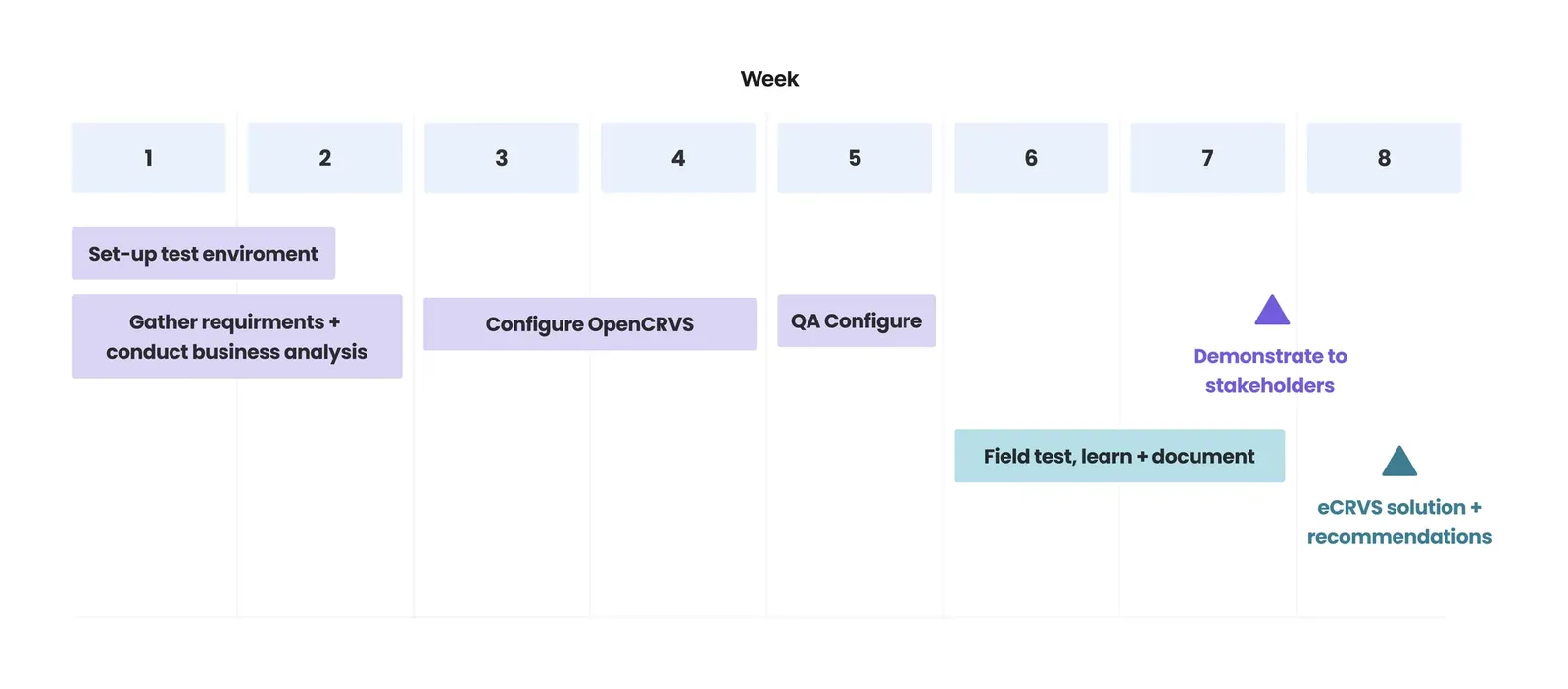
A Proof of Concept (PoC) is suitable when you are considering a digital CRVS system but have not yet decided on a specific product, or if you are interested in an OpenCRVS implementation and would like a low-cost prototype initially. It is also an effective approach when you need to define future-state civil registration business processes or want to co-create eCRVS system requirements collaboratively with key users. ✎
See more about the PoC ✎What does implementation involve? ✎
OpenCRVS implementation requires a holistic, long-term approach considering strategic and organizational factors. The CRVS Digitisation Guidebook serves as a step-by-step guide on planning, analysis, design, and implementation of digitised CRVS systems. ✎
For countries with ineffective paper-based or electronic civil registration, full digital transformation is needed. This means redesigning technology, people, and processes for excellent service delivery, user satisfaction, and maximizing civil registration data value across government. The following overview outlines a CRVS digital transformation roadmap for a large country (over 100 million people) with low registration completeness and varying processes. ✎

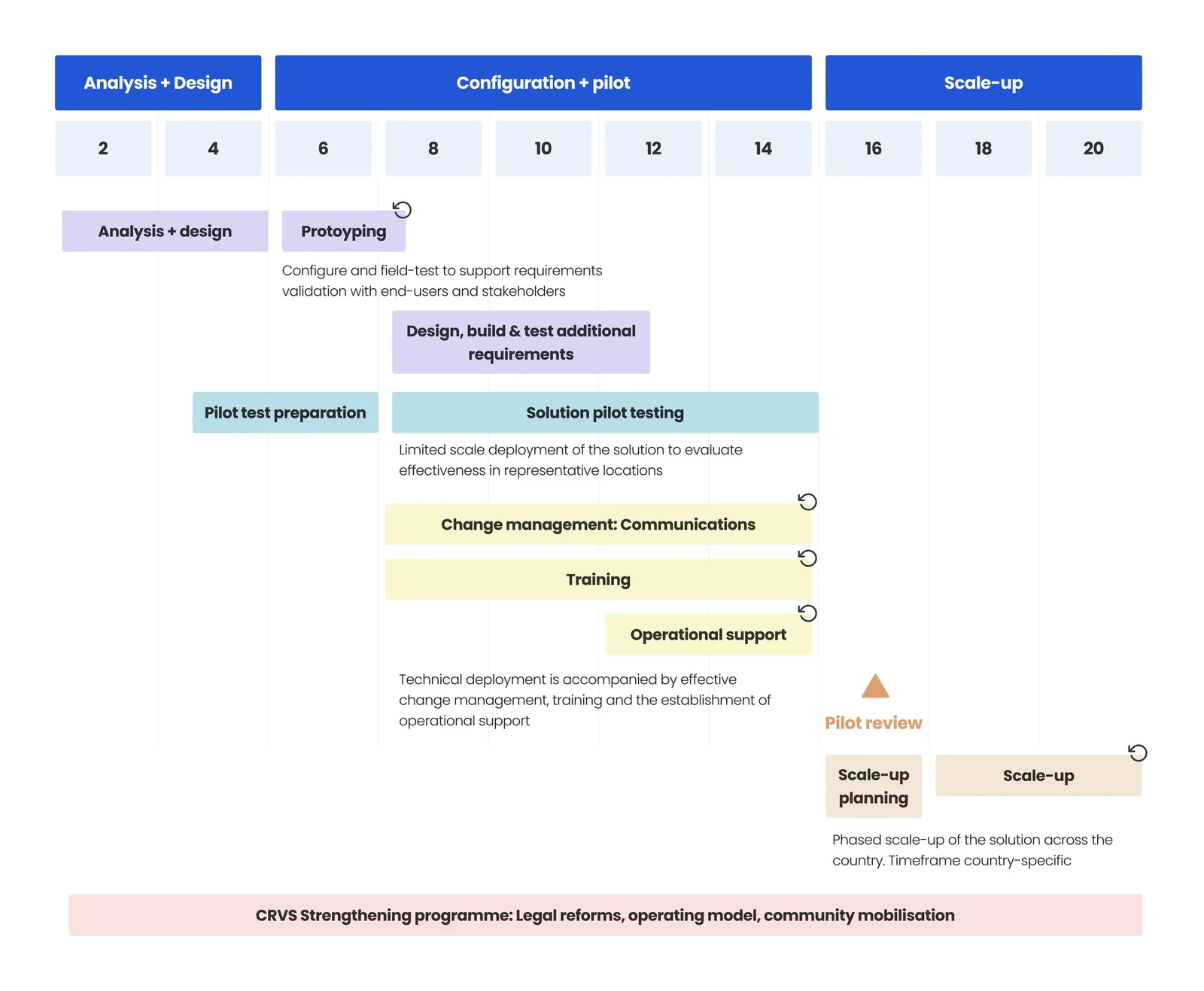
When planning an OpenCRVS implementation it is necessary to take a holistic and long-term approach, considering a number of strategic and organisational factors. It is recommended to use the CRVS Digitisation Guidebook, which provides step-by-step guidance for countries to plan, analyse, design and implement digitized CRVS systems. In particular, business analysis will often be required to assess existing CRVS processes and re-engineer them to be the efficient, automated processes of the future state. ✎
CRVS Digitisation Guidebook ✎What are the costs associated? ✎
OpenCRVS is a free, open-source, no-license-fee Digital Public Good. However, the Total Cost of Ownership (TCO) for a digital CRVS system must account for other costs: initial development, national rollout, and long-term operation and maintenance. ✎
Some of OpenCRVS aspects that will reduce your Total Cost of Ownership (TCO). ✎

Open Source
No restrictions on who can deploy and maintain the solution in a country and no ties to specific vendors giving you flexibility to use local talent.

Quick configuration
Configurable for use in just a week, you can quickly test in field conditions and assess any additional requirements.

Free training
Upskill government and local resources to reduce international resource requirements.

Hardware requirements
The product runs on any android phone, so low-spec devices or even personal mobile phones can be used.

Free upgrades
All patches, fixes and new features are made available at no cost.

New functionality
New features can be developed by the core product team, minimising your costs for new development.
Check out a full breakdown of the typical cost categories for an OpenCRVS implementation along with notes of where it can help reduce the overall TCO. ✎

Looking for an implementation partner? ✎
If you are planning a CRVS digitisation programme and want advice on which partners suit your context, procurement route and timeline, book a call with our team. No cost, no obligation. ✎
Book a call ✎