Cook Islands
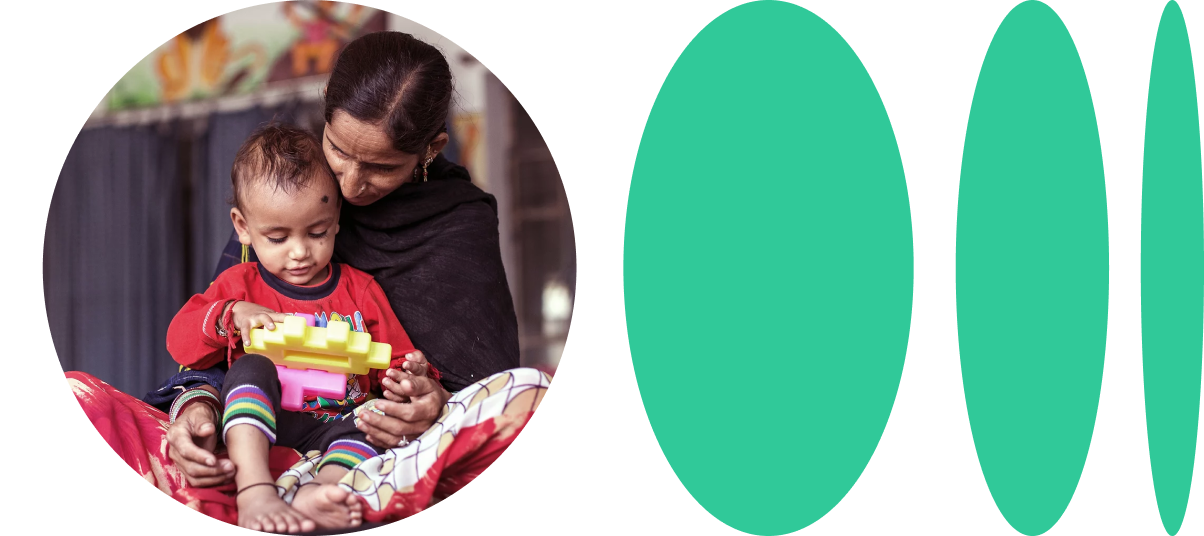
Civil registration systems are vital for legal identity, public services, and statistics. While the Cook Islands had strong historical coverage for births and deaths, the paper-based system failed to meet modern demands.
Managing paper registers across 15 islands, spread over two million square kilometres, caused delays, risked damage or loss, and created access barriers for outer island citizens (pa enua).
To improve resilience, accessibility, and service delivery, the Ministry of Justice undertook a national digital transformation of its Civil Registration and Vital Statistics (CRVS) system.
The result is Te Reinga Ora’anga – “The Stages of Life.”
Context and problem to solve
In the Pacific, many births and deaths go unregistered, denying individuals legal identity and governments vital planning data. A birth certificate is a person's first legal ID, enabling access to passports, school, voting, and essential services.
In the Cook Islands, these life events are culturally and nationally significant. However, a longstanding manual, paper-based system created barriers: delayed registration, record vulnerability, and difficult access for outer island (pa enua) communities.
A reliable, accessible, and resilient system was necessary to ensure every life event is recorded and recognised.

Why OpenCRVS
OpenCRVS was selected as the platform for the Cook Islands’ digital CRVS transformation because it aligns with the country’s priorities for data sovereignty, sustainability, and long-term ownership.
As an open-source Digital Public Good, OpenCRVS ensures that all civil registration records remain under the stewardship of the Ministry of Justice, protected by strong security, privacy, and audit controls.
The platform also eliminates licensing costs and vendor lock-in, making it a cost-effective and sustainable solution for a small island nation.
Importantly, OpenCRVS supports the full suite of civil registration services – including births, deaths, marriages, divorces, stillbirths, adoptions, and legal name changes – enabling the Cook Islands to manage all life events through a single, integrated system.

Methodology
Te Reinga Ora'anga was developed through a collaborative co-design process involving Registry Services, Internal Affairs, Inland Revenue, the Cook Islands Statistics Office, and medical staff at Rarotonga Hospital.
Through a series of workshops, stakeholders mapped existing processes, identified challenges, clarified roles, and agreed on a shared approach. This ensured that the system aligns with national legislation, reflects how services are delivered in practice, and meets the needs of both government and citizens.
The implementation was supported by regional and global partners. The Pacific Community (SPC) provided regional coordination and technical support, while the Bloomberg Data for Health Initiative supported the programme through funding. This was complemented by OpenCRVS technical teams and a system integration partner, Deloitte, reflecting a growing ecosystem supporting OpenCRVS deployments globally.


Implementation approach
Te Reinga Ora’anga introduced a fully digital approach to civil registration, built around three key areas:
Secure Digital Registration:
All life events are recorded through secure digital workflows, supporting the full suite of civil registration services.
• Births: Maternity units notify the Ministry of Justice, enabling timely registration from the earliest stage of life.
• Deaths: Medical practitioners record the medical cause of death digitally, with information shared securely to support registration and downstream processes.
• Other life events: Marriage and other registration workflows are managed digitally, ensuring records are complete, traceable, and securely maintained.
Inter-Agency Coordination:
The system enables secure information sharing between authorised stakeholders, supporting more coordinated service delivery across government.
• Civil registration data can be accessed by approved agencies to support administrative processes and reduce duplication.
• Death information supports end-of-life administrative processes across relevant stakeholders.
• Aggregated data strengthens national statistics and planning.
The platform already supports secure information sharing across government agencies, while enabling further integration as systems evolve.
Expansion and Accessibility:
As rollout extends to the pa enua, communities will be able to declare life events locally, have them registered centrally, and receive certificates closer to home. Distance should never be a barrier to identity.
As part of this rollout, the Cook Islands became the first country in the Pacific to deploy the full suite of civil registration events on a single digital platform, setting a new benchmark for CRVS systems in the region.


Impact and benefits
The shift to a digital CRVS system has significantly improved both service delivery and data quality.
Certificates can now be generated more quickly and efficiently, reducing delays and administrative burden for families. At the same time, digital records are more secure and reliable, protected from physical damage or loss and maintained with greater integrity over time.
The system also improves the availability of timely and accurate data, supporting decision-making across health, social protection, and other government services. Historical records are being progressively digitised and integrated, preserving national archives while making them more accessible.
Importantly, life events are formally recorded and recognised, helping individuals access services across the country.
(photo courtesy: Ministry of Justice, Cook Islands at the platform's launch event)


-
![Peter graham]() Paper‐based systems have limitations. This platform gives us a more resilient and future‐ready way to manage records that people depend on, both here and overseas. Peter Graham Cook Islands Secretary of Justice
Paper‐based systems have limitations. This platform gives us a more resilient and future‐ready way to manage records that people depend on, both here and overseas. Peter Graham Cook Islands Secretary of Justice -
![Image]() Open‐source allows governments and their peoples to retain control of their information systems and adapt them over time. It also allows countries to learn from each other’s implementations, rather than starting from scratch. Shez Farooq OpenCRVS Pacific Transformation Lead
Open‐source allows governments and their peoples to retain control of their information systems and adapt them over time. It also allows countries to learn from each other’s implementations, rather than starting from scratch. Shez Farooq OpenCRVS Pacific Transformation Lead


By deploying OpenCRVS, the Cook Islands has modernised its civil registration system into a secure, efficient, and nationally owned digital platform.
This transformation not only protects the identity of every person across every island, but also strengthens the delivery of services and the quality of national data.
The Cook Islands’ experience provides a practical model for other countries – particularly small and geographically dispersed island nations – seeking to modernise civil registration systems using open and sustainable digital solutions.
Te Reinga Ora’anga digitally connects the stages of life, bringing together tradition and technology to ensure life events are securely recorded, recognised in law, and preserved as part of the nation’s story.
Want to know more about OpenCRVS?
If your country is also looking to transform your CRVS services, please get in touch.
Book a demo